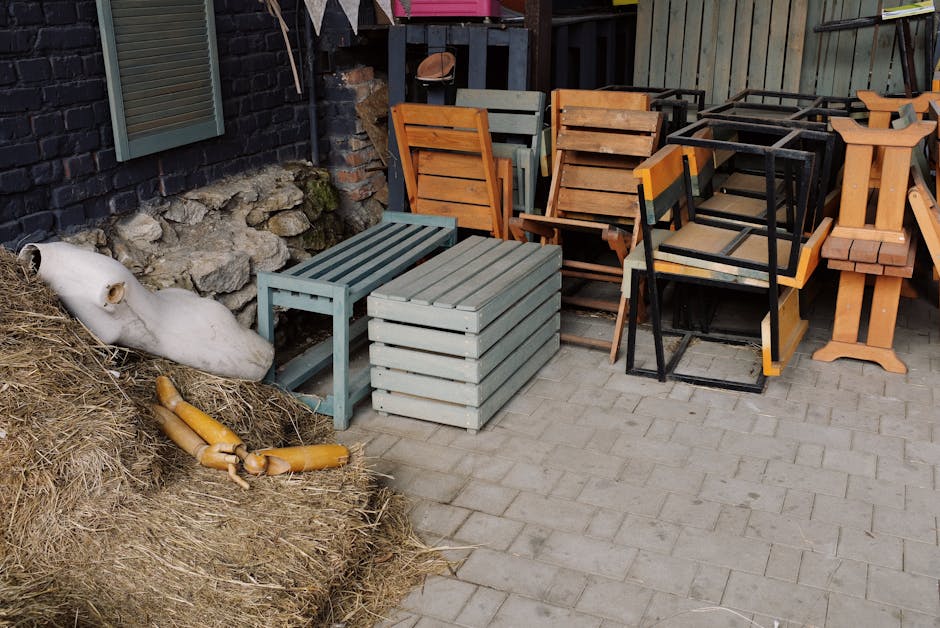
Eco friendly furniture disposal and removals in Ladbroke Grove
If you are staring at an old sofa, a broken wardrobe, or a table that has seen one too many moves, you are not alone. Furniture disposal looks easy until you are the one wrestling a heavy chest of drawers down a narrow stairwell in Ladbroke Grove, wondering what is reusable, what needs recycling, and how to avoid turning a simple job into a mess. Eco friendly furniture disposal and removals in Ladbroke Grove is about doing that job properly: with less waste, more reuse, and a lot less stress.
Done well, it is not just a greener choice. It is usually the tidier, safer, and more practical one too. In this guide, we will walk through how sustainable furniture removal works, what to expect locally, the mistakes people make, and how to choose a method that fits your situation. Whether you are clearing a flat, replacing office furniture, or emptying a property after a move, you will find a straightforward route through it all.
Table of Contents
- Why Eco friendly furniture disposal and removals in Ladbroke Grove Matters
- How Eco friendly furniture disposal and removals in Ladbroke Grove Works
- Key Benefits and Practical Advantages
- Who This Is For and When It Makes Sense
- Step-by-Step Guidance
- Expert Tips for Better Results
- Common Mistakes to Avoid
- Tools, Resources and Recommendations
- Law, Compliance, Standards, or Best Practice
- Options, Methods, or Comparison Table
- Case Study or Real-World Example
- Practical Checklist
- Conclusion
- Frequently Asked Questions
Why Eco friendly furniture disposal and removals in Ladbroke Grove Matters
Furniture is bulky, awkward, and surprisingly easy to mishandle. A single wardrobe can scratch walls, block hallways, and make a normal lift look suddenly tiny. Add in the fact that so many items still have usable life left in them, and it becomes clear why a more thoughtful approach matters.
Ladbroke Grove has its own practical realities. Flats, mansion blocks, converted houses, busy roads, parking pressure, and staircases that seem designed by someone with a grudge. That means removals are not just about lifting. They are about timing, access, sorting, and deciding the right route for each item. Eco friendly furniture disposal keeps all of that in view.
It also helps reduce the amount of furniture sent to landfill. To be fair, not everything can be reused, but a lot more can be than people assume. A sofa with a worn arm, a solid wood table, office desks, or bedroom furniture with minor damage may still be suitable for reuse, donation, refurbishment, or component recycling. That is where the environmental gain really happens.
There is a human side too. Many people do not want the place to feel stripped out and wasteful after a move or a declutter. They want the job done cleanly, with some sense that usable things are being handled responsibly. That feeling matters. It is one of those small things that makes a stressful week a bit more manageable.
Practical takeaway: eco friendly furniture disposal is not just about "being green." It is about sorting items intelligently, reducing waste, protecting your property, and choosing a removal method that matches the reality of London living.
How Eco friendly furniture disposal and removals in Ladbroke Grove Works
The process is usually simpler than people expect, but it works best when it is planned properly. A good eco friendly removal is really a sequence of decisions: what can be reused, what must be dismantled, what needs special handling, and how to get it out safely without unnecessary trips or damage.
1. Identify the furniture type
Start by separating bulky items from smaller ones. Sofas, beds, wardrobes, desks, shelving, chairs, dining tables, and cabinets each behave differently during removal. A flat-pack chest of drawers is a different beast from a heavy oak sideboard. The more clearly you understand what is being moved, the easier it is to avoid waste and avoid fuss.
2. Decide whether reuse is possible
If a piece is still clean, structurally sound, and safe to use, reuse should usually come first. That might mean resale, donation, or passing it on to someone else. In some cases, a quick repair or deep clean is enough to extend its life. A slightly scuffed table is not the same as a piece that is broken beyond repair.
3. Plan disassembly where needed
Large items often need to come apart before they leave the property. This matters for safety and for access. Doors, legs, shelves, bed frames, and modular units may need tools and a bit of patience. You will notice the difference immediately when the route includes tight corners or a narrow staircase. Sometimes the job is not hard; it is just fiddly. That is life.
4. Load for sorting, not dumping
An eco minded removals team should separate reusable items from recyclable material and general waste. That way, one sofa does not automatically end up treated the same way as ten broken chipboard shelves. Sorting at the point of collection reduces contamination and gives more of the load a second life.
5. Transport to the right destination
Depending on condition, furniture may go to reuse channels, recycling facilities, or lawful disposal routes. The important part is that the destination matches the item. Good handling is not dramatic; it is just careful, efficient, and transparent. Which is exactly what you want when someone is carrying your old wardrobe through the front door at 8:15 on a grey Tuesday morning.
Key Benefits and Practical Advantages
Eco friendly furniture disposal has environmental value, of course, but the day-to-day benefits are often what persuade people in the end. They are practical. Real-world practical.
- Less waste: More furniture is reused, refurbished, or recycled instead of simply being discarded.
- Cleaner property clearance: Your home or business is left tidier, with fewer items and less clutter hanging around.
- Safer moving experience: Heavy lifting is handled with the right approach, which helps reduce damage and injury risk.
- Better use of usable items: Furniture that still has life in it gets a second chance instead of being written off too early.
- More efficient removals: A well-planned collection can save time, especially when access is tight.
- Less stress: You do not have to juggle sorting, lifting, transporting, and disposal all at once.
There is also a quieter advantage that people tend to appreciate after the job is done: peace of mind. You are less likely to wonder where your furniture ended up or whether it was handled properly. That matters, especially if you are clearing a family home, dealing with an office move, or just trying to make a sensible, responsible decision.
And let's be honest, it feels better to know the old sofa did not just vanish into a black hole of generic disposal. Small win, but still a win.
Who This Is For and When It Makes Sense
This service is useful for a lot more people than you might think. It is not only for full house clearances or major moves. In Ladbroke Grove, where many homes have limited space and busy access, even a small furniture removal can become a bigger job than expected.
Homeowners and renters
If you are moving out, refreshing a room, replacing a mattress, or decluttering before guests arrive, eco friendly furniture removal saves effort and reduces the odds of damage. It also helps when landlords or letting agents expect a property to be left clean and cleared.
Families clearing inherited property
When a home has to be emptied after a life change, the job can feel emotionally heavy. Sorting furniture into keep, donate, reuse, and dispose categories makes the process easier to manage. It can be surprisingly grounding, even in the middle of everything else.
Small businesses and offices
Desks, office chairs, filing cabinets, shelving, and reception furniture all need careful handling. If you are changing location or upgrading your workspace, office removals can be a sensible route, especially when the aim is to reduce waste and keep the move organised.
People with one or two large items
Sometimes it is not a whole flat. It is one bed, one wardrobe, or a sofa you have been meaning to sort for months. You might think it is too small to matter, but these jobs often benefit the most from a planned, eco friendly collection. The item is out of the way quickly, and you avoid dragging it around the house for another week.
Anyone with limited access
If you live near tight street parking, on an upper floor, or in a property with awkward internal access, it makes sense to choose a removal method that includes planning, lifting skill, and the right vehicle. For many local residents, a flexible service such as man with van support is the difference between a tidy solution and a frustrating half-day of trying to improvise.
Step-by-Step Guidance
If you want the process to feel manageable, break it into steps. Simple as that. Here is the practical version we recommend.
- List every item: Write down the furniture you want removed. Include beds, wardrobes, chairs, tables, and anything awkward like headboards or shelving units.
- Check condition: Separate items that can be reused from those that are damaged beyond repair. A quick visual check is usually enough to start.
- Measure access: Note stair widths, lift size, doorway clearance, and any parking restrictions outside. It saves time later.
- Decide on dismantling: Identify items that need to come apart before collection. Beds and wardrobes often do.
- Clear the route: Move small items, rugs, and loose objects away from hallways and doors.
- Book the right size of service: Match the job to the load. Too small, and you end up with delays. Too large, and you may pay for capacity you do not need.
- Ask about reuse and recycling: If sustainability matters to you, say so upfront. A decent provider should be able to explain how they handle different item types.
- Prepare the furniture: Remove cushions, drawers, loose parts, and personal items. It sounds obvious, but people forget it all the time.
- Confirm arrival details: Make sure access instructions, parking notes, and contact details are clear.
- Check the final load: Before the vehicle leaves, make sure all agreed items are accounted for. It avoids awkward surprises.
A tiny bit of prep can make a big difference. In fact, it usually does. The smoother the handover, the more likely the job is to finish in one go.
Expert Tips for Better Results
Here are the little decisions that often separate a decent removal from a really good one.
1. Sort before collection day
If you wait until the vehicle arrives to decide what goes, the process slows down. Have a clear line between keep, donate, recycle, and dispose. Even a rough separation helps.
2. Keep reusable furniture clean
If an item might be reused, wipe it down and remove loose dirt. A sofa with crumbs, pet hair, and mystery fluff is much harder to pass on. Not impossible, just less appealing. We have all seen one of those chairs, sadly.
3. Dismantle only where it helps
People sometimes take everything apart unnecessarily. That can waste time and risk losing fittings. Dismantle the items that need it, not the ones that do not.
4. Think about timing
Early starts can be useful in busier parts of London, especially where parking is tighter later in the day. A quieter street in the morning can save a lot of hassle. You will notice the difference when the van is not circling for a space.
5. Ask how the provider handles mixed loads
Mixed loads are normal. What matters is whether the team sorts them properly afterwards. If they can explain the process in plain English, that is usually a good sign.
6. Keep a photo record for larger jobs
For office clearances or multi-item domestic jobs, photos help confirm what is being removed and can prevent misunderstandings. It is a simple habit, but a useful one.
One small, slightly boring tip that saves a lot of grief: label drawers or boxes if you are keeping the furniture but moving it elsewhere. The labels matter more than you think, especially three days later when everything looks the same.
Common Mistakes to Avoid
Most problems with furniture disposal are avoidable. Usually. The trouble starts when people underestimate the size of the job or assume every old item can just be "taken away somehow."
- Leaving sorting until the last minute: This leads to confusion and wasted time.
- Forgetting access issues: Tight stairs, parking limits, and blocked entrances can slow everything down.
- Assuming all furniture is the same: A mattress, a glass table, and a large wardrobe all require different handling.
- Not checking whether items can be reused: Some things should be given a second life if possible.
- Skipping measurements: A door that looks wide enough can still be too tight for a bulky sofa.
- Choosing on price alone: Cheapest is not always best, especially when care, lifting, and responsible disposal are involved.
- Failing to ask about disposal methods: If sustainability matters, ask the question. Don't assume.
There is also a softer mistake: trying to do too much yourself. Plenty of people are capable of moving a chair or a small table. Fewer are happy halfway up a staircase with a heavy wardrobe and a scratched wall. That is where a bit of judgement saves money and stress in the long run.
Tools, Resources and Recommendations
You do not need a warehouse full of gear to dispose of furniture properly, but a few basics make the process safer and more organised.
| Tool or resource | What it helps with | Why it matters |
|---|---|---|
| Measuring tape | Doorways, stairs, furniture dimensions | Prevents access surprises and unnecessary dismantling |
| Screwdrivers and Allen keys | Breaking down beds, tables, wardrobes | Speeds up disassembly and keeps the load manageable |
| Moving blankets | Protecting walls, door frames, and furniture | Reduces scratches and small damage during removal |
| Gloves | Grip and hand protection | Useful for rough edges, splinters, and awkward lifting |
| Labels or tape | Marking parts and keeping items organised | Makes reassembly or sorting much easier later |
| Photos of items | Planning and quoting | Helps communicate the scale and type of job clearly |
For local residents, it also helps to use services that understand moving around Ladbroke Grove and nearby streets. If you need broader support for moving rather than just disposal, removal services can be a practical fit. For smaller single-item jobs, furniture pick up may be the simplest route.
If you are comparing providers, also look at their approach to sustainability. The page on recycling and sustainability is a helpful place to understand how a responsible removals business should think about waste, reuse, and environmental impact.
Law, Compliance, Standards, or Best Practice
Furniture disposal is not something to be casual about. In the UK, waste should be handled legally and responsibly, and that includes bulky household items and commercial furniture. The exact obligations depend on the item type, the source of the waste, and who is removing it, so it is wise to stay cautious rather than overstate anything.
As a rule of thumb, use a provider that can explain where items go and how they are dealt with. If a company cannot answer basic questions about reuse, recycling, or lawful disposal, that is a red flag. You do not need a lecture. You do need clarity.
Best practice usually includes:
- clear item identification before collection
- safe manual handling and proper loading
- separation of reusable and non-reusable items where possible
- respect for building access, neighbours, and parking constraints
- transparent communication about the final disposal route
Health and safety also matters. Furniture can be heavy, awkward, sharp-edged, or unstable. That is why it helps to use a team with a sensible approach to lifting and transport. If you want more context on how a provider approaches safe work, the health and safety policy and insurance and safety information are worth reviewing.
For local removals, access and parking are part of compliance in a practical sense too. In some parts of London, a badly planned vehicle stop can cause delays and irritation for everyone on the street. Not glamorous, but true. Good planning is part of doing the job properly.
Options, Methods, or Comparison Table
There is no single "right" way to handle furniture removal. The best method depends on time, item condition, access, and whether you want reuse to be prioritised. Here is a simple comparison to help you think it through.
| Method | Best for | Pros | Trade-offs |
|---|---|---|---|
| Self-disposal | Very small loads and simple access | Full control, potentially cheaper | Heavy lifting, transport hassle, disposal sorting is on you |
| Donation or reuse | Good-condition furniture | Longest possible life for the item, less waste | Not all items qualify, collection may need coordination |
| General bulky item removal | Mixed furniture loads | Convenient, fast, often easiest for households | May not maximise reuse unless the provider sorts carefully |
| Full removal service | Moves, clearances, office changes | Most organised, safer for larger jobs | More planning required upfront |
If you are dealing with a broader house move, house removals or home moves may be relevant too, especially if furniture disposal is part of a bigger transition. On the commercial side, commercial moves can help when office furniture needs to be moved, removed, or replaced in one coordinated job.
Case Study or Real-World Example
Here is a typical local scenario. A couple in a second-floor flat near Ladbroke Grove is replacing a sofa, a bed frame, and an old dining table. Nothing dramatic. But the stairwell is narrow, parking is tight, and the sofa will not fit cleanly around the turn on the landing. The couple originally thought they could manage it themselves with a borrowed van and a friend. Truth be told, that plan usually sounds better at 9 a.m. than it feels at 3 p.m.
Instead, they list the items, check which pieces are still reusable, remove loose cushions and fittings, and arrange a removal with the right vehicle size. The bed frame is dismantled before collection. The table legs are removed. The team takes the furniture out carefully, protects the walls, and separates reusable timber and metal components where possible.
The result is not just a cleared flat. It is a cleaner handover, less risk of damage, and fewer items going straight to waste. The couple avoids an extra trip to a disposal site, the hallway stays intact, and the whole job feels much less chaotic than it might have done otherwise.
That kind of example is common. It is rarely the huge, dramatic clearance people imagine. More often, it is a handful of ordinary items that become complicated because of access, time, or weight. Once those details are handled, the rest becomes surprisingly straightforward.
Practical Checklist
Use this checklist before collection day. It will save you from the usual little headaches.
- Identify every furniture item to be removed
- Check whether each item can be reused, donated, or recycled
- Measure doors, stairs, lifts, and access routes
- Confirm parking or loading arrangements
- Remove personal items from drawers and cupboards
- Detach loose parts such as cushions, shelves, and table legs
- Clear hallways and entry points
- Protect floors or walls if needed
- Take photos for reference if the job is larger
- Confirm the booking time and contact details
- Ask how the provider handles reuse and recycling
- Make sure any special items are mentioned in advance
If you can tick most of those off, you are already ahead of the game. And yes, that little bit of prep really does matter.
Conclusion
Eco friendly furniture disposal and removals in Ladbroke Grove is really about making a practical choice that respects your time, your property, and the wider environment. It helps you clear bulky items without wasteful habits, and it gives reusable furniture a better chance of finding a second life.
The best outcomes usually come from simple habits: sort early, measure carefully, ask the right questions, and choose a removal approach that suits the actual job rather than the ideal version in your head. That is especially true in a busy local area where access, parking, and stairs can turn a small job into a bit of a puzzle.
If you are planning a move, clearing a room, or dealing with a pile of furniture that has outstayed its welcome, the next step is straightforward: get the details together, then arrange the most sensible solution for the load. A calm, well-planned removal always feels better than a rushed one.
Get a free quote today and see how much you can save.
Sometimes the best kind of progress is the quiet kind: one cleared room, one less headache, and a little more breathing space at home.
Frequently Asked Questions
What counts as eco friendly furniture disposal?
It usually means prioritising reuse first, then recycling where possible, and only disposing of what cannot be salvaged safely or legally. The aim is to reduce waste and keep furniture in use for as long as it makes sense.
Can old furniture be reused even if it looks worn?
Sometimes, yes. Minor wear, scratches, or faded fabric do not always rule out reuse. What matters is whether the item is structurally sound, clean enough, and safe for someone else to use.
How do removals teams decide what gets recycled?
They usually look at material type, condition, and whether the item can be separated into recyclable parts. Wood, metal, and some fabrics may be handled differently depending on the load.
Is furniture disposal more expensive if I want it handled sustainably?
Not always. Costs depend on item size, access, labour, and transport. Sustainable handling can sometimes be built into the process rather than added as a separate extra. The sensible thing is to ask for a clear quote.
Do I need to dismantle furniture before collection?
Only if it helps with access or safe removal. Some items should be left intact, while others like beds and wardrobes are easier to move in sections. If in doubt, mention the item when booking and ask what is best.
What furniture items are hardest to remove?
Large wardrobes, bulky sofas, beds with heavy frames, glass tables, and awkward corner units are often the trickiest. Tight hallways and stairs make the job harder, so planning matters.
How far in advance should I book a furniture removal?
If your timing is flexible, booking ahead gives you more options. For urgent clearances, same-day help may be available, but the earlier you plan, the smoother it usually goes.
Can office furniture be handled the same way as home furniture?
Broadly yes, but office jobs often involve more pieces, more logistics, and more attention to scheduling. A coordinated approach is usually better for desks, chairs, filing cabinets, and meeting room furniture.
What should I do with furniture that is damaged beyond repair?
Damaged items should be assessed for recycling or lawful disposal. If the structure is broken or unsafe, reuse is unlikely to be suitable. A responsible removals service should explain the next step clearly.
How do I know if a removals company is handling waste responsibly?
Ask direct questions about reuse, recycling, and disposal routes. A trustworthy provider should answer in plain language without being vague. If they dodge the question, that tells you something useful too.
Is furniture removal in Ladbroke Grove affected by access issues?
Often, yes. Local streets, parking limitations, and building layouts can all affect timing and loading. That is why a proper assessment before collection is so helpful.
What is the best option for just one or two items?
For a small number of items, a flexible furniture pick-up or man-and-van style service can be the most practical choice. It keeps the job simple without making you organise more than you need.